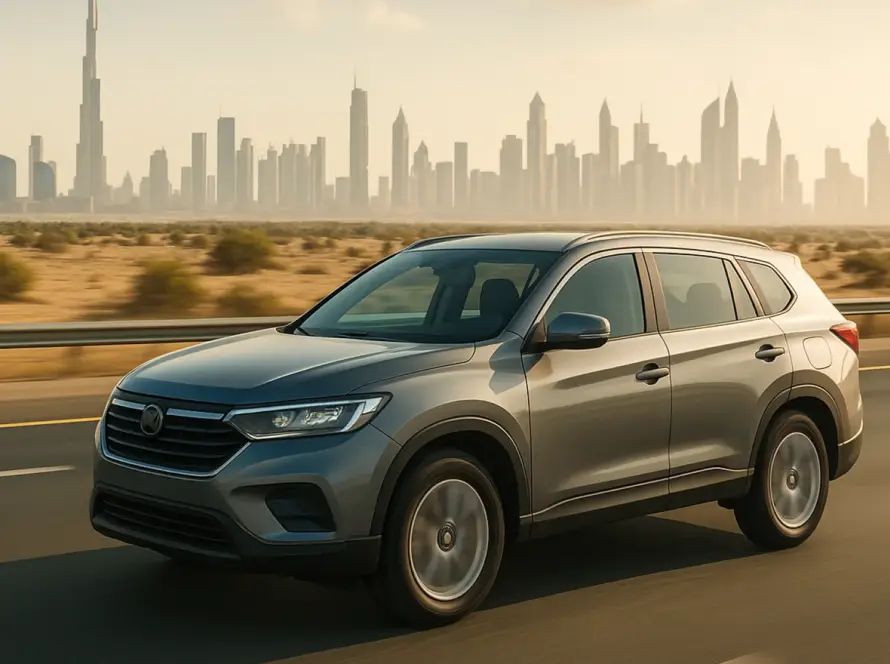
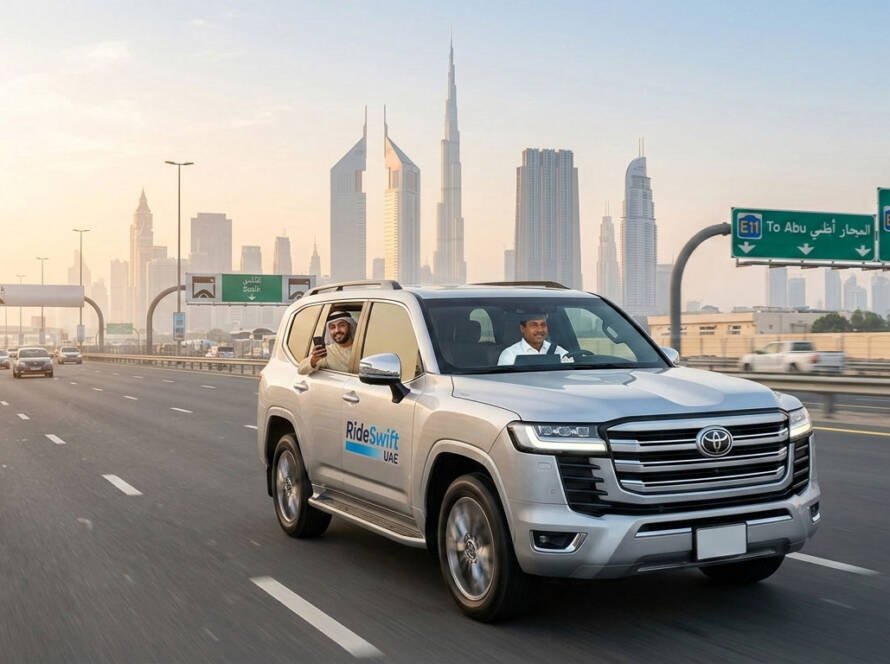
Three years ago, I found myself stationary on the E11. The Dubai skyline shimmered through the heat haze, yet my immediate reality was a sea of brake lights stretching infinitely toward Sharjah. That singular moment of gridlock forced a professional reckoning. As a mobility consultant who spends thousands of hours analyzing urban transit flows, I realized I was actively participating in the exact inefficiency I was paid to solve. My solitary presence in a five-seater SUV was not just a personal frustration; it was a microscopic fragment of a massive macroeconomic failure. Solving this required more than adjusting my departure time. It demanded a structural shift in how we perceive daily transit. The search for a reliable car pool near me in UAE shifted from a passing thought to a critical operational priority.
Executive Summary: The Commuter Dilemma
| Transit Variable | Solo Commuting Reality | Shared Mobility Advantage |
|---|---|---|
| Financial Outlay | High vulnerability to fluctuating fuel costs, peak Salik charges, and accelerated vehicle depreciation. | Cost-sharing models reduce individual transit expenses by up to 65% annually. |
| Psychological Toll | Elevated cortisol levels. Commuter fatigue. Reduced workplace productivity. | Passive commuting. Opportunities for rest, reading, or networking. |
| Environmental Impact | Maximum carbon footprint per passenger kilometer. | Drastic reduction in Scope 3 emissions. Alignment with corporate ESG goals. |
| Legal Complexity | Zero compliance friction. | Requires adherence to RTA regulations regarding unlicensed transport. |
The Urgent Economics of a Car Pool Near Me in UAE
Analyzing the balance sheet of a daily inter-emirate commute reveals startling financial attrition. The obvious metrics are easily quantified. We calculate the cost of Super 98 petrol. We count the Salik gates—Al Safa, Al Barsha, Al Maktoum—each chiming away four dirhams at a time. However, the hidden costs represent the true financial hemorrhage. Extreme ambient summer temperatures degrade tires at an accelerated rate. Idling in heavy traffic places immense thermal stress on cooling systems and transmissions. Amortizing these expenses across a single occupant makes solo driving incredibly inefficient.
When I conducted a proprietary audit for a mid-sized logistics firm in Deira, we isolated the transit expenses of their workforce. Employees driving alone from Ajman or Sharjah to Dubai were forfeiting nearly 18% of their monthly income to their commute. By transitioning them into structured shared transit, the financial liberation was immediate. Seeking out a reliable car pool near me in UAE essentially serves as a direct wage increase. The mathematics are irrefutable. Dividing fuel, toll, and wear-and-tear costs by three or four instantly optimizes household cash flow. Beyond the microeconomics of the individual, the macroeconomics of the city benefit. Fewer vehicles mean reduced infrastructural degradation and lessened demand for sprawling parking monoliths in high-density zones like DIFC or Business Bay.
Navigating the Legalities: Finding a Legal Car Pool Near Me in UAE
The regulatory environment in the Emirates is meticulously structured. You cannot simply stand on the side of Al Ittihad Road and charge strangers for a ride. The Roads and Transport Authority (RTA) maintains rigorous oversight to prevent illegal taxi operations. Engaging in unlicensed commercial transport carries severe punitive measures, including massive fines exceeding Dh3,000, vehicle impoundment, and potential deportation for expatriates. This strictness is not punitive; it is protective. It guarantees that passenger safety and vehicular standards are maintained.
Understanding this legal scaffolding is paramount. Legitimate carpooling must operate on a cost-sharing basis, not a profit-making one. You are legally permitted to share the specific costs of the journey—fuel and tolls—but generating an income from the transit crosses the line into commercial transport. For years, the Sharekni initiative attempted to formalize this, but the landscape has evolved toward sophisticated technological solutions. Today, finding an authorized car pool near me in UAE relies on platforms that explicitly operate within these stringent regulatory confines, ensuring that all cost-sharing mathematics comply with local laws. The distinction between a shared ride and a clandestine taxi service rests entirely on the financial arrangement and the platform facilitating the connection.
Technological Matchmaking in Modern Transit
We are long past the era of physical notice boards in office breakrooms. The modern shared mobility ecosystem is governed by highly complex algorithms. When you query a platform for a ride, you are not merely searching a static database. You are interacting with dynamic routing logic that factors in geospatial mapping, real-time traffic density, route deviation tolerances, and temporal synchronization. The technology performs a multidimensional calculus to match you with a driver whose origin, destination, and schedule align precisely with yours.
During my tenure evaluating mobility software, I analyzed how these matching engines handle the unique geography of the Emirates. The E311 (Sheikh Mohammed Bin Zayed Road) and E611 (Emirates Road) present entirely different traffic behaviors at 7:00 AM compared to 4:00 PM. A sophisticated platform calculates the optimal pickup points—often geo-fenced safe zones—to prevent the driver from getting trapped in secondary road congestion just to pick up a passenger. For professionals seeking a seamless integration of these technologies, utilizing a premier UAE carpooling platform ensures that this algorithmic heavy lifting is handled flawlessly. You receive a match that respects your time constraints while navigating the intricate arterial flow of the city.
The Environmental Imperative of UAE Carpool Services
The conversation surrounding mobility has irreversibly shifted toward sustainability. The UAE’s Net Zero by 2050 strategic initiative is not a mere political talking point; it is a binding directive reshaping corporate and municipal operations. Personal vehicles are a primary driver of urban greenhouse gas emissions. The internal combustion engine, idling in the dense traffic corridors connecting the northern emirates to Dubai, is a glaring target for carbon reduction.
When an individual decides to leave their vehicle parked and instead joins a shared ride, the immediate carbon offset is quantifiable. The International Renewable Energy Agency (IRENA), headquartered in Abu Dhabi, continuously emphasizes that optimizing existing transport infrastructure is just as critical as transitioning to electric vehicles. If four people ride in one vehicle instead of four separate vehicles, the tailpipe emissions for that specific journey are effectively quartered. The urban heat island effect—exacerbated by thousands of hot engines and air conditioning compressors running simultaneously—is marginally mitigated. On an annualized basis, a single commuter switching to a car pool near me in UAE can eliminate several tons of CO2 from their personal footprint. This is actionable environmentalism.
Safety, Vetting, and Commuter Etiquette
Sharing an enclosed space with a stranger requires a foundation of absolute trust. The psychological barrier to entry for many potential commuters is not financial; it is safety. How do I know the driver is competent? Is the vehicle insured correctly? These are the friction points that advanced platforms solve through rigorous vetting protocols. Verification of Emirates ID, valid driver’s licenses, and comprehensive vehicle registration are non-negotiable prerequisites. Furthermore, third-party liability insurance parameters must be strictly defined to ensure all occupants are covered in the event of a kinetic incident.
Beyond hard safety metrics, the success of a car pool near me in UAE hinges on interpersonal etiquette. Punctuality is the bedrock of shared transit. A three-minute delay by one passenger cascades into a fifteen-minute delay at the final destination due to missed traffic light cycles and compounding congestion. I strongly advise establishing clear ground rules before the first kilometer is driven. Is music acceptable? Is it a silent commute? Are phone calls permitted? Establishing these micro-agreements prevents the silent friction that often destroys informal ride-sharing arrangements. Moreover, many platforms now offer women-only carpool options, providing a deeply necessary layer of comfort and security tailored to specific cultural and personal preferences.
Corporate Adoption and Inter-Emirate Bottlenecks
We must examine the specific topography of inter-emirate transit. The border between Sharjah and Dubai is one of the most heavily trafficked corridors in the Middle East. Bottlenecks at National Paints or the Al Ittihad Road entry points are legendary. Local media regularly document the profound impact this specific commute has on workforce morale. Forward-thinking human resource departments are recognizing that commuter stress directly correlates with elevated employee turnover and diminished early-morning productivity.
Consequently, we are witnessing a surge in corporate-sponsored mobility programs. Companies are subsidizing or entirely facilitating the search for a car pool near me in UAE for their staff. By organizing internal carpools based on residential clusters (e.g., matching all employees living in Al Nahda), corporations solve multiple problems simultaneously. They reduce the demand for limited office parking. They guarantee their staff arrive less fatigued. Crucially, they can claim these carbon reductions in their annual ESG (Environmental, Social, and Governance) reporting under Scope 3 emissions. This creates a fascinating paradigm where finding a shared ride is no longer just a grassroots commuter initiative, but a top-down corporate mandate driven by efficiency and sustainability.
Strategic Route Planning for the Frequent Traveler
Let us delve into the granular realities of route selection. The psychological comfort of having an alternate driver cannot be overstated, especially when navigating the high-speed dynamics of the Abu Dhabi to Dubai corridor. The E11 is efficient, but it requires relentless hyper-vigilance. The mental fatigue of tracking radar flashes, variable speed limits, and sudden braking events is exhausting. When you secure a high-quality car pool near me in UAE, you are essentially buying back your cognitive bandwidth.
I advise commuters to utilize secondary highways when negotiating ride routes. The E611, while geographically longer, often provides a more stable average velocity compared to the stop-and-go nature of the E311. A proficient shared transit arrangement will actively map these alternatives. The driver, financially incentivized by the cost-sharing agreement to maintain efficiency, will naturally seek the path of least resistance. This mutual alignment of interests—getting to the destination safely, cheaply, and quickly—is the core philosophy that makes ride-sharing superior to solitary driving.
The Future Architecture of Ride Sharing Near Me
What does the horizon hold for regional mobility? We are transitioning from localized app matching to fully integrated smart-city transit networks. The deployment of dedicated high-occupancy vehicle (HOV) lanes is a logical municipal progression. If local transport authorities implement lanes strictly reserved for vehicles carrying three or more passengers, the demand for a car pool near me in UAE will explode exponentially. The time-saving incentive would dwarf even the financial benefits.
Furthermore, the integration of electric vehicle (EV) fleets into the sharing economy is accelerating. Imagine a scenario where your matched ride is not merely cost-effective, but entirely zero-emission. The infrastructure is already being laid across the Emirates to support this. Autonomous pods and AI-driven predictive routing will eventually remove the human element of matchmaking entirely. Your calendar will sync with a regional transit grid, and a shared vehicle will seamlessly align with your morning routine without a single screen tap.
Until that autonomous utopia arrives, we must rely on the immediate tools at our disposal. Refusal to adapt to shared transit is a voluntary acceptance of financial loss and unnecessary stress. The roads are not getting wider. The population is not shrinking. The geometry of urban density dictates that we must use the asphalt we have more intelligently. Participating in a shared transit network is an acknowledgment of this reality. It is a commitment to personal efficiency, environmental stewardship, and communal pragmatism. The next time you find yourself idling in a sea of stationary vehicles, remember that the solution is already circulating around you. You merely need to connect to it.