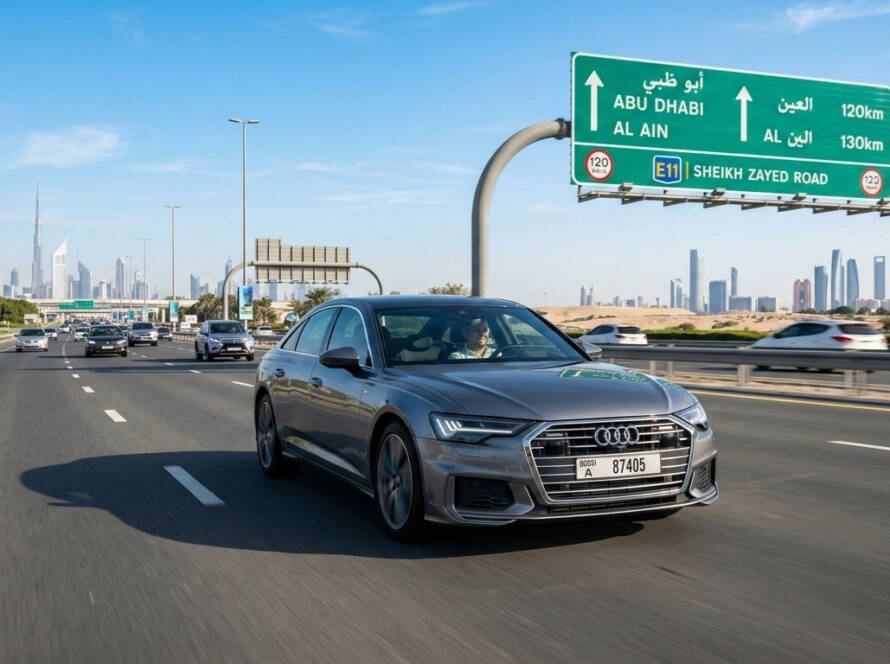
Understanding the Standard Dubai to Abu Dhabi Taxi Fare Structure
Planning a run down Sheikh Zayed Road to the capital? Whether you are heading to a meeting on Al Maryah Island or catching a flight out of Zayed International, sorting out your transport budget early saves you a headache at the curb. For most travelers, the standard Dubai to Abu Dhabi taxi fare lands between AED 250 and AED 350 for a one-way trip in a regular sedan. The final number on the taximeter simply depends on where you step in and where you get dropped off.
Dubai’s Roads and Transport Authority (RTA) runs every official taxi on a transparent metered rate, but long-haul inter-emirate trips carry a couple of unique charges you might not spot during a quick run around Downtown Dubai:
- Distance rate: Every kilometer on the highway clocks in at roughly AED 2.21.
- The border toll: Crossing out of Dubai triggers an automatic, non-negotiable AED 20 inter-emirate surcharge added directly to the meter balance.
- Waiting time: Crawling through peak-hour bottlenecks near the border adds about AED 0.50 per minute of standstill traffic.
Your trip cost also shifts based on how you secure your ride. Waving down a cream-colored cab curbside is slightly cheaper upfront, while pre-booking through the Careem app (Hala Taxi) costs a touch more for the guaranteed pickup window.
| Booking Method | Daytime Starting Fare | Night Starting Fare (10 PM – 6 AM) |
|---|---|---|
| Street Hail | AED 5.00 | AED 5.50 |
| Careem (Hala Taxi) | AED 8.00 | AED 9.00 |
Keep in mind that hailing off the street works great outside major malls or transit hubs, but if you are tucked away in a residential community early in the morning, relying on an empty cab to roll past is a gamble. Spend the extra three dirhams on the app and secure the booking.
Key Factors That Increase Your Inter-Emirate Cab Costs
While the base meter starts predictably, your final Dubai to Abu Dhabi taxi fare often creeps up due to a handful of real-world variables. If you simply hail a car without checking the clock or the vehicle class, you could easily pay an extra 50 to 150 AED.

1. Rush Hour Gridlock on the E11
Timing is everything. Hitting Sheikh Zayed Road (E11) southbound between 4:30 PM and 7:30 PM on a weekday means crawling past JAFZA and Dubai Marina. The meter runs on both distance and time; every minute spent inching forward adds waiting charges to your tab. Early mornings (before 7:00 AM) or midday runs offer clear stretches where the driver can cruise at 120–140 km/h, keeping the time-based meter component to an absolute minimum.
2. Double Tolls: Salik Meets Darb
Your cab crosses two distinct automated toll networks:
- Salik (Dubai): You will pass through at least one or two gates depending on where your ride starts (like Al Safa or Jebel Ali), billed at 4 AED each.
- Darb (Abu Dhabi): Entering the capital during peak hours triggers Abu Dhabi’s toll system (also 4 AED per gate).
Drivers automatically add these automated scans directly to your final meter bill at the end of the trip.
3. Vehicle Categories
The iconic cream-colored Dubai taxi (typically a hybrid Toyota Camry) is your cheapest option. Stepping up to larger or premium vehicles immediately raises both the base flag drop and the per-kilometer rate.
| Cab Type | Typical Vehicle | Cost Impact vs. Standard Sedan | Best For |
|---|---|---|---|
| Standard Fleet | Toyota Camry / Altis | Base rate | Solo travelers, couples |
| Family Van | Toyota Innova | ~15–25% higher | 4+ passengers, heavy luggage |
| Luxury / EV | Tesla Model 3/Y | ~30–40% higher | Business travel, added comfort |
4. Entry Bottle-Necks and Waiting Meters
Once you pass the Ghantoot border area, traffic can bottleneck near Yas Island or the Corniche approaches. If security conducts spot checks or city traffic stalls, the meter continues ticking. If you are heading deep into downtown Abu Dhabi rather than stopping at the outskirts, budget an extra 20 to 30 minutes of low-speed meter
Real-World Route Cost Breakdown: Dubai Hubs to Abu Dhabi Hotspots
Your exact Dubai to Abu Dhabi taxi fare depends heavily on which pocket of the city you start in. Crossing the emirate border isn’t a flat-rate deal; you pay by the meter, which means every kilometer spent clearing Dubai’s urban crawl adds up fast.
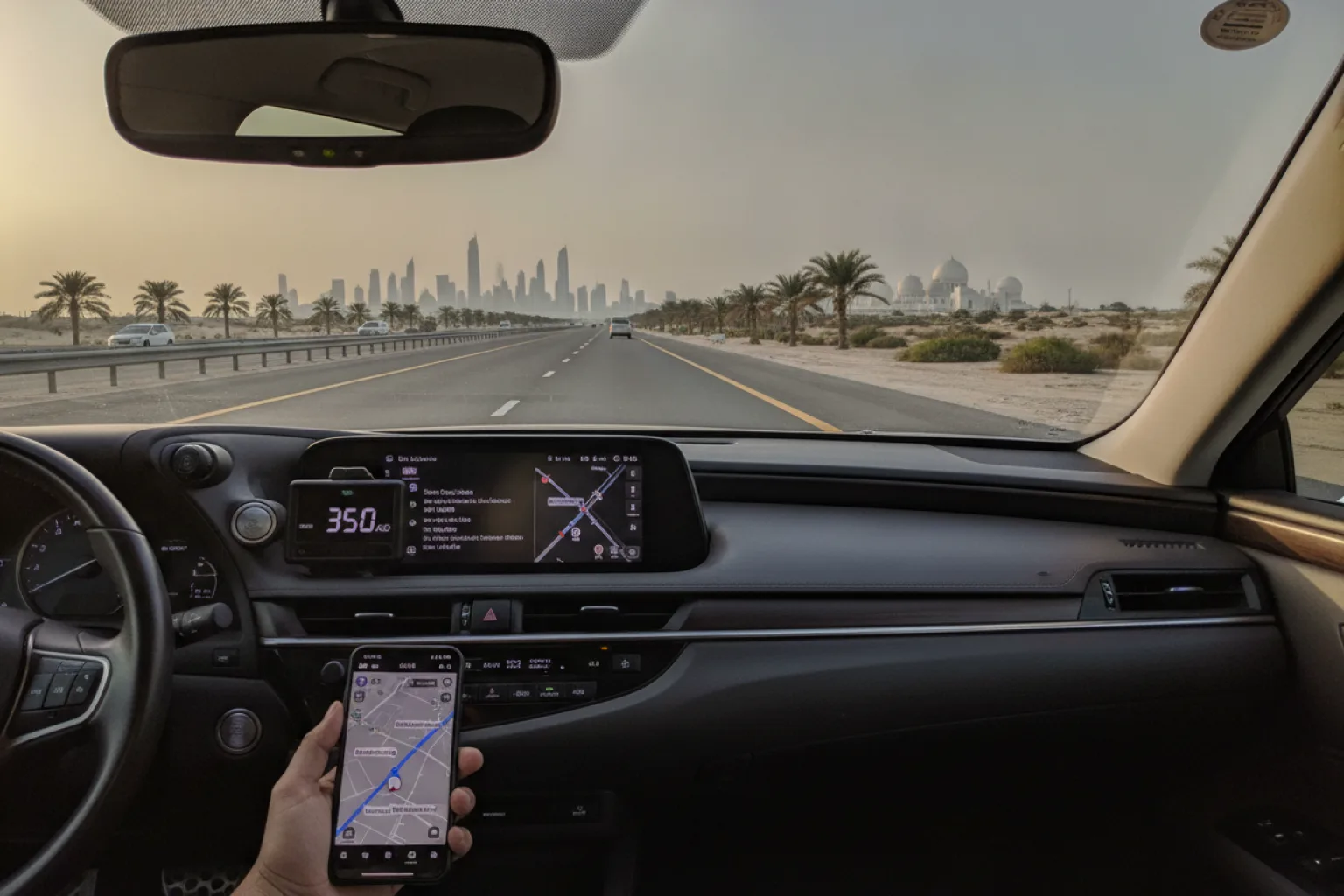
Here is what you can realistically expect to pay across the most common point-to-point transfers:
| Route (Origin to Destination) | Est. Fare (AED) | Drive Time |
|---|---|---|
| DXB Airport to Downtown Abu Dhabi | 300 – 380 | 1 hr 45 mins |
| Dubai Marina / JBR to Yas Island | 220 – 270 | 50 – 60 mins |
| Downtown Dubai to Sheikh Zayed Mosque | 260 – 310 | 1 hr 20 mins |
Starting from DXB Airport sits at the high end for two reasons: the initial airport flagfall (AED 25) and the simple fact that the airport sits on the northern edge of Dubai. You have to traverse the entire city before hitting the open highway. If you hit peak evening traffic along the E11 (Sheikh Zayed Road), that AED 300 baseline can easily creep toward AED 380 as the meter ticks during crawl speeds.
Conversely, heading out from New Dubai hubs like Dubai Marina or JBR cuts both time and cost dramatically. Yas Island sits on Abu Dhabi’s northern border, making it a straight 50-minute shot down the highway for around AED 220 to AED 270.
For the classic tourist run—Downtown Dubai (Burj Khalifa area) to the Sheikh Zayed Grand Mosque—budget roughly AED 285. You bypass the airport surcharge, but you still have a solid 130-kilometer run ahead of you.
The Return Trip Factor Hiring a silver Abu Dhabi ITC taxi for your ride back to Dubai often works out slightly cheaper than the outbound journey. Abu Dhabi’s base starting rate is marginally lower, and their drivers rarely hit the same start-stop congestion leaving the capital as you face when leaving central Dubai. Expect to save roughly AED 15 to AED 30 on the reverse leg.
RTA Metered Taxis vs. Uber, Careem, and Private Chauffeurs
If you hail an ordinary cream-colored Dubai taxi off the street, your meter starts ticking under tightly regulated Road and Transport Authority (RTA) rules. For an inter-emirate haul, the meter tacks on a flat 20 AED cross-border fee the second you cross into Abu Dhabi, leaving your standard Dubai to Abu Dhabi taxi fare somewhere between 250 AED and 320 AED under normal traffic.
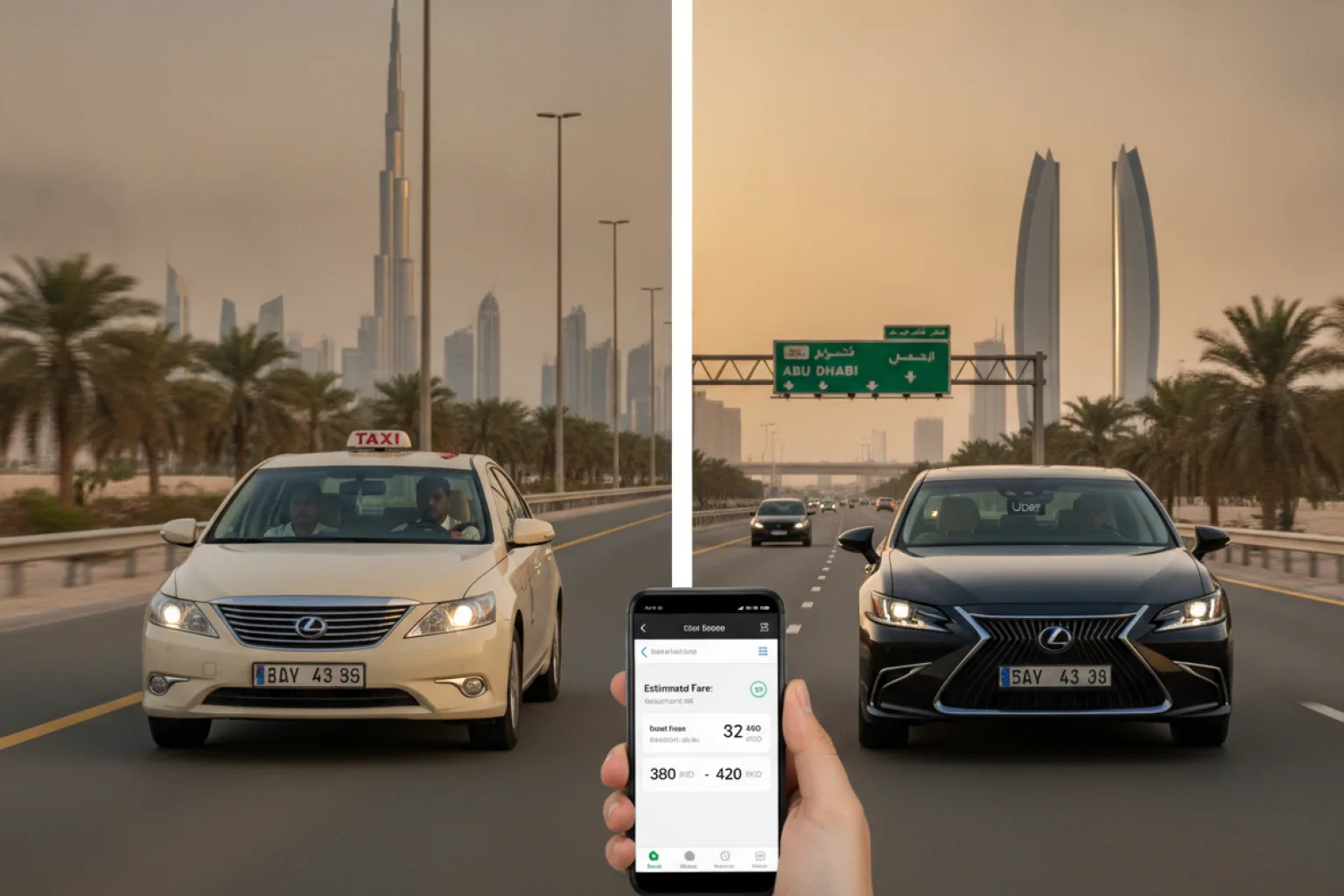
Ride-hailing apps paint a different picture.
Careem and Uber offer comfort, but they rely on dynamic algorithms. On a quiet Tuesday morning, a Careem ride might only run you 15% more than an RTA cab. Try booking that same car on a Friday evening, or when ADIPEC fills the Abu Dhabi National Exhibition Centre, and surge multipliers kick in. A trip that should cost 350 AED can violently spike past 600 AED before you realize what hit your credit card. Formula 1 race weekend at Yas Marina is notorious for this; drivers cancel rides to chase peak multipliers, stranding passengers who assumed app pricing was predictable.
| Service Type | Typical Pricing Basis | Best For | The Catch |
|---|---|---|---|
| RTA Metered Taxi | Regulated distance + 20 AED border fee | Budget-conscious solo travelers & couples | Basic vehicles; line waits at terminals |
| Uber / Careem | Dynamic / algorithmic pricing | On-demand premium sedans (Lexus ES) | Severe surge pricing during events |
| Private Chauffeur | Fixed flat rate agreed upfront | Corporate travelers & airport arrivals | Needs booking hours or days ahead |
For business travelers with strict schedules, private chauffeur companies eliminate the guessing game. Services offering vehicles like a Mercedes S-Class or BMW 7 Series charge fixed inter-emirate rates (usually 500 AED to 800 AED). You pay a premium, but you bypass surge pricing entirely, get flight monitoring included, and skip the unpredictable queues outside Dubai International (DXB).
If keeping costs low is your goal, stick to standard RTA sedans—just wave them down or book via the Hala feature on Careem to get the metered rate without the surge trap.
Official Fare Regulations and Trusted Transit Guidelines
Inter-emirate travel is heavily regulated, which works in your favor. Your trip runs under dual oversight: Dubai’s Roads and Transport Authority (RTA) governs the pickup, while Abu Dhabi’s Integrated Transport Centre (ITC) regulates the destination end. Because of this, calculating a baseline Dubai to Abu Dhabi taxi fare doesn’t involve guesswork—drivers cannot negotiate flat rates off the cuff.
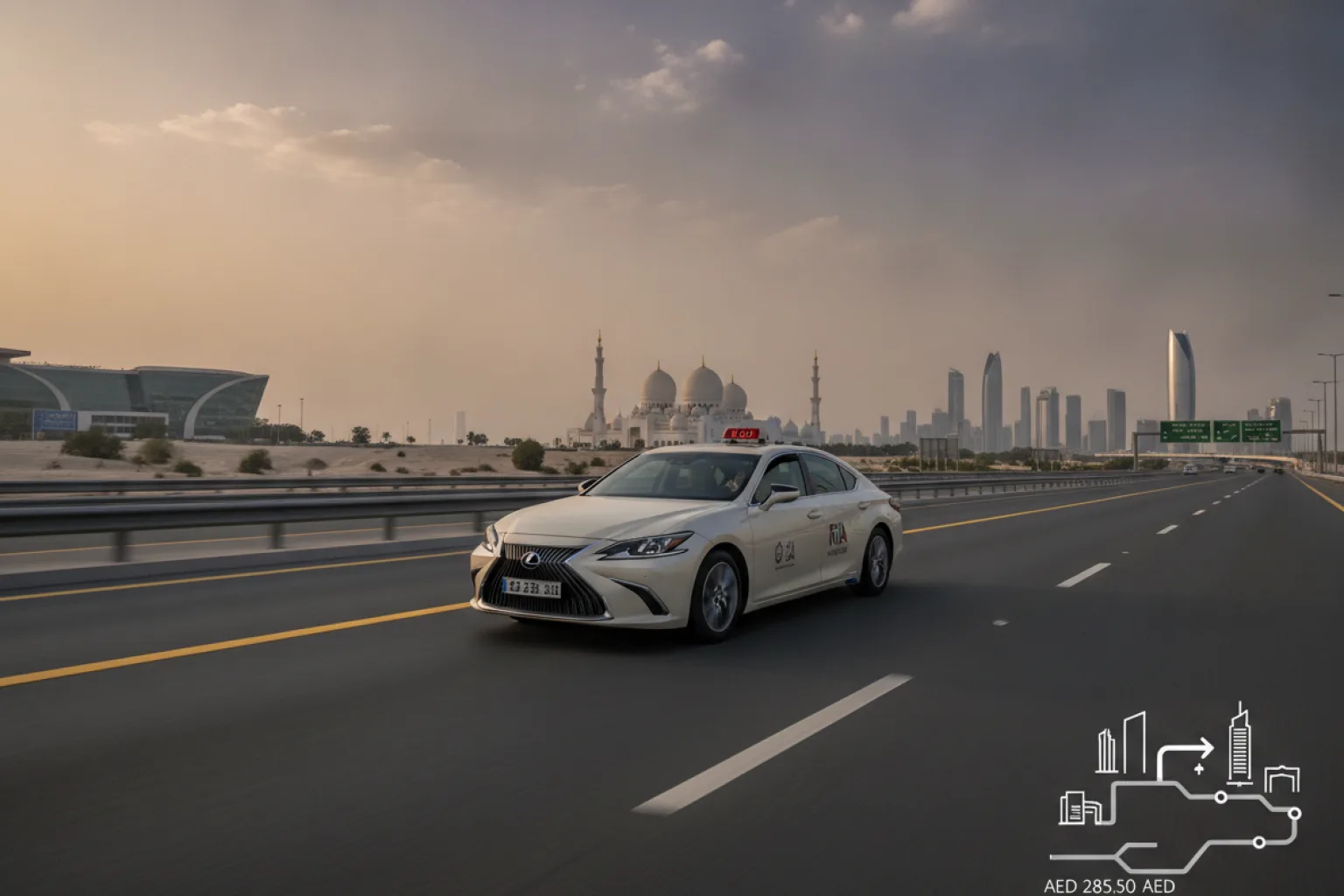
By law, your driver must engage the taximeter the moment the journey begins. If a driver claims the meter is broken, refuse the ride. UAE transport regulations state clearly: no meter running means a free ride. Always request a printed or SMS receipt at the end. That paper slip contains the taxi plate number and driver ID, which you’ll desperately need if you accidentally leave a bag behind.
Payment Flexibility at a Glance
You don’t need a wallet stuffed with cash to cross emirate borders. Both RTA sedans and family vans support multiple payment channels directly inside the vehicle:
| Method | Accepted? | Practical Tip |
|---|---|---|
| Visa / Mastercard | Yes | Always tell the driver before they finalize the meter total. |
| Dubai Nol Card | Yes | Ensure your balance covers the full inter-city trip beforehand. |
| Apple / Google Pay | Yes | Standard POS machines accept NFC taps without surcharges. |
| Cash (AED) | Yes | Carry 50s and 100s; drivers rarely have change for 500-dirham notes. |
Note: You can also manage payment seamlessly by booking ahead through the official S’hail or Careem (Hala Taxi) apps.
Beware Terminal “Hustlers”
As you step out of Dubai International (DXB) arrivals, men in plain clothes will inevitably whisper, “Abu Dhabi? Cheap taxi, luxury car, my friend.”
Walk right past them.
These unlicensed private haulers operate outside the regulatory net. They run without commercial passenger insurance, use zero rate oversight, and routinely hit unsuspecting travelers with hidden baggage or toll fees mid-highway. Follow the overhead airport signs directly to the official, cream-colored RTA taxi rank instead. You’ll wait in a brief queue, but you get a licensed driver, proper safety standards, and zero pricing drama.
Common Mistakes Travelers Make When Taking a Taxi to Abu Dhabi
Even seasoned visitors get caught off guard by the logistics of an inter-emirate cab ride. A few small oversights can easily push your total Dubai to Abu Dhabi taxi fare higher than budgeted or leave you stranded at an ATM.
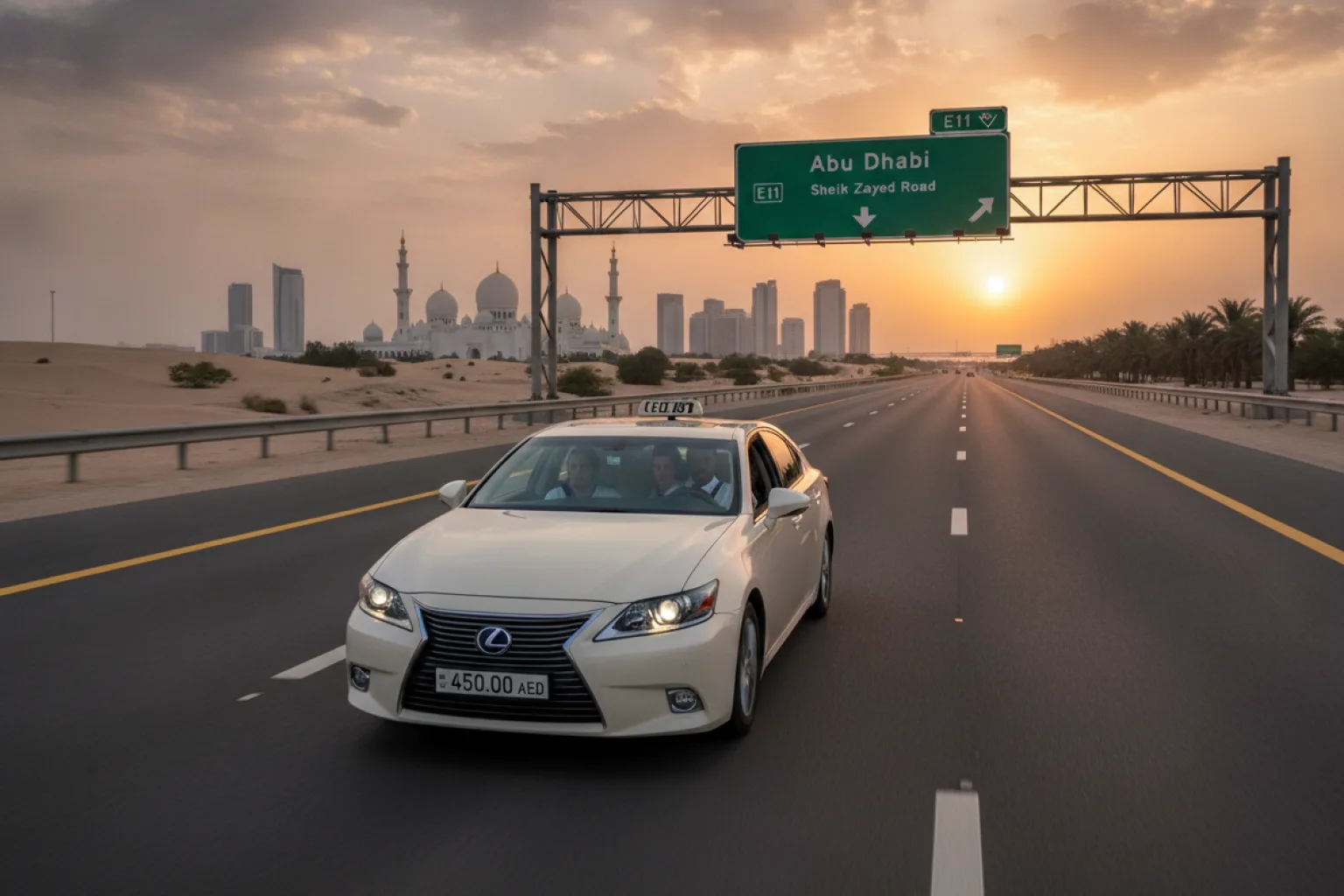
Here are the most frequent slip-ups to watch out for:
- Not checking the card terminal before you leave: Always ask the driver, “Card payment working?” before putting your luggage in the trunk. While RTA cabs are mandated to accept cards, machines occasionally lose signal near the border or suffer “glitches.” Finding out your driver insists on cash outside the Sheikh Zayed Grand Mosque is a massive headache.
- Hitting the E11 during peak commute windows: Rush hour crawls between 7:00 AM–9:30 AM and 5:00 PM–7:30 PM on weekdays. Sitting in bumper-to-bumper traffic racks up waiting-time charges on the meter, quickly inflating your fare.
- Assuming your Nol card works in the capital: Dubai runs on the Nol system; Abu Dhabi uses Hafilat cards. If your plan is to jump out of the cab and onto an Abu Dhabi city bus, your Nol balance won’t help you.
- Hailing the cab directly from northern Dubai: Starting your journey in Deira, Downtown, or Dubai Marina makes a big difference to your wallet. You can shave a noticeable chunk off the bill by using public transit for the first leg.
| Route Choice | Travel Time | Typical Meter Impact |
|---|---|---|
| Cab direct from Downtown Dubai | ~80–95 mins | Full meter rate for the entire ~140 km stretch |
| Metro to Ibn Battuta + Cab from there | ~110 mins | Cuts roughly 30–35 km off the taxi meter |
Hopping on the Red Line down to Ibn Battuta station or UAE Exchange before flagging a cab puts you right near the southern edge of the emirate. It adds roughly 30 minutes to your trip, but it cuts your out-of-pocket taxi bill significantly. If you are traveling solo or on a budget, that simple pivot is well worth the extra stop.
How to Budget and Book Your Dubai to Abu Dhabi Trip Efficiently
Getting between the two emirates comes down to balancing time against your wallet. A direct cab offers door-to-door ease, but it is not always the smartest move depending on your headcount.
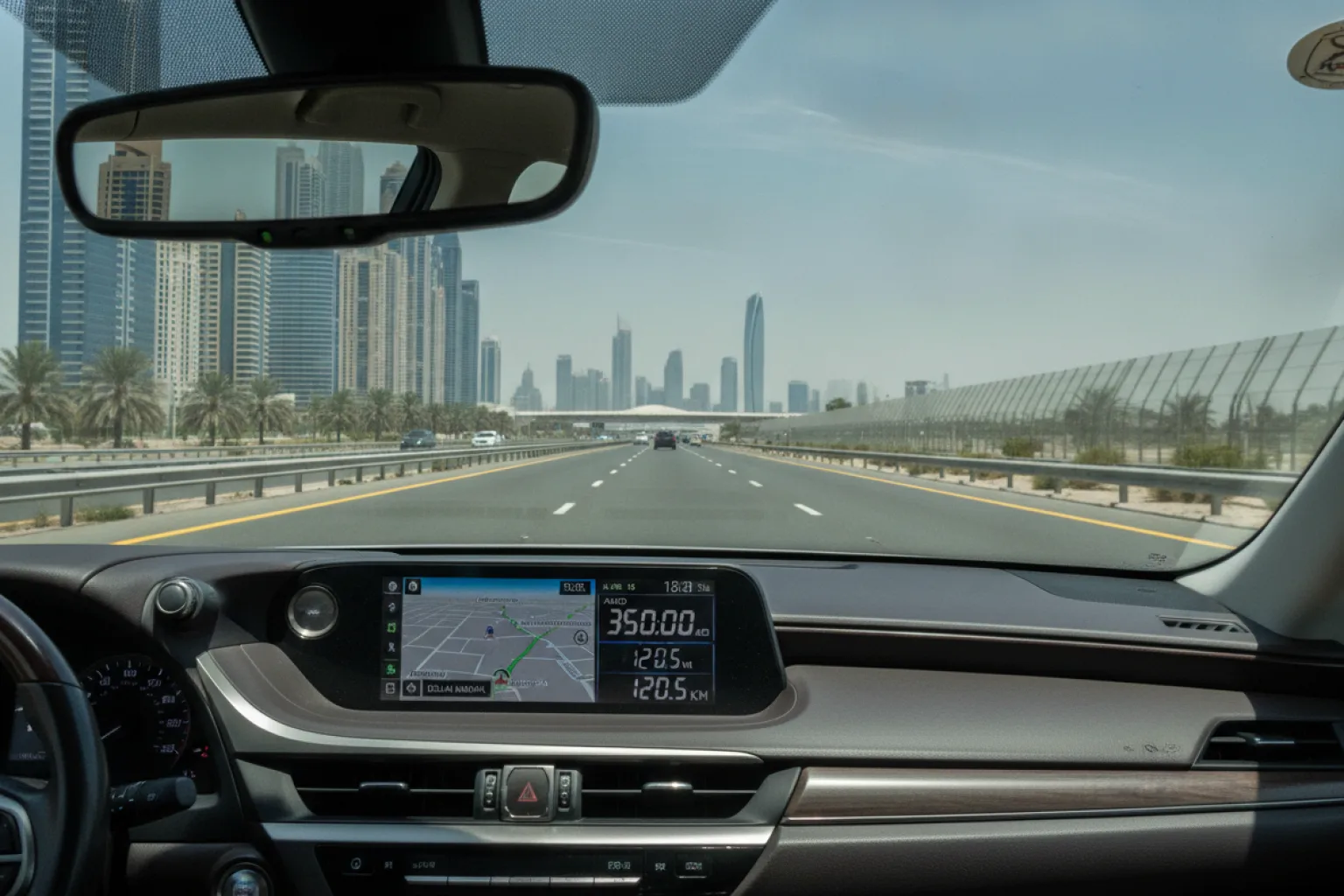
| Transport Option | Best For | Approx. Cost | Travel Time |
|---|---|---|---|
| Standard RTA / Hala Taxi | Small groups (2–4), direct hotel drop | AED 250–320 total | 75–90 mins |
| Private Transfer (Chauffeur) | Business travel, late-night flights | AED 400–550 total | 75–90 mins |
| E101 Intercity Bus | Solo backpackers, strict budgets | AED 25 per person | 110–130 mins |
If you are traveling solo, the math is brutal: paying the full Dubai to Abu Dhabi taxi fare yourself hurts when the E101 bus from Ibn Battuta costs pocket change. But the moment you split a standard cab three or four ways, you are looking at roughly AED 70 to AED 80 per person. That makes a taxi faster, cheaper than multiple metro-and-bus legs, and far more convenient.
To avoid standing on the curb haggling with street drivers over long-distance rates, book through the Careem app:
- Open Careem and select the “Hala Taxi” tile.
- Set your pickup in Dubai and drop-off point in Abu Dhabi (e.g., Yas Island or Corniche).
- Choose a standard sedan or a Hala Max (6-seater) if you have bulky luggage.
- Confirm the fare estimate, lock in your credit card, and track the driver.
Before the wheels roll, run a quick checklist with your driver. Confirm they are resetting the meter—never agree to an off-meter flat cash rate, which is illegal and usually inflated. Ask if Salik (road toll) charges are rolling into the meter automatically; on RTA cabs, they do. Finally, verify their card terminal is working if you plan to pay by Visa or Mastercard, as cellular dead zones near the border occasionally cause handheld machines to drop signal.
Ready to book your next trip? Visit Ride Swift UAE today and experience the smarter way to travel across the Emirates or call us on +971567858018.