I remember standing in the freezing rain outside a sprawling corporate campus in 2018, clutching a clipboard. My team was auditing parking utilization for a massive tech firm employing 3,200 people. They had exactly 1,800 parking spots. The resulting daily chaos was staggering. Employees were circling lots for forty minutes, blood pressure spiking before they even touched their keyboards. We tried off-site shuttle leases. We tried staggered shift times. Nothing stuck. That was the exact moment I realized traditional commute infrastructure was entirely ossified. The modern workforce required a dynamic, algorithmic approach. Enter the scoop carpool model.
A true scoop carpool framework is entirely distinct from the casual, bulletin-board ride-sharing of the 1990s. It represents a highly structured, data-driven enterprise mobility network. It pairs co-workers based on precise geographic coordinates, arrival time windows, and behavioral preferences. Over the past decade, I have architected dozens of these systems for Fortune 500 companies. I have seen firsthand how replacing chaotic morning commutes with a structured corporate carpool network radically alters corporate culture.
Executive Summary: The Anatomy of Corporate Commuting
| Mobility Strategy | Capital Expenditure | Implementation Time | Employee Adoption Rate | Environmental Impact |
|---|---|---|---|---|
| New Parking Construction | $30k – $50k per space | 18-36 months | High (Passive) | Negative (Increased carbon footprint) |
| Public Transit Subsidies | Low to Moderate | Immediate | Location Dependent (15-25%) | Positive |
| Algorithmic Scoop Carpool | Low (Software licensing/Subsidies) | 4-8 weeks | High (30-45% with incentives) | Highly Positive |
| Private Corporate Shuttles | High | 3-6 months | Moderate | Positive (Consolidated transit) |
The Mechanics Behind a Scoop Carpool Ecosystem
You cannot simply throw an app at an employee base and expect behavioral transformation. Establishing an enterprise ridesharing network requires a fundamental redesign of commuter incentives. The mechanics of a scoop carpool rely heavily on minimizing friction. If a commuter must deviate more than six minutes from their standard route to pick up a colleague, adoption drops by 80%. We discovered this through rigorous A/B testing during a pilot program in Seattle.
To counter this, modern scoop carpool algorithms utilize advanced spatial heuristics. They map not just the origin and destination, but the actual traffic flow variations at 7:15 AM versus 8:00 AM. They calculate the ‘deadhead’ miles—the distance driven without a passenger—and minimize them. Drivers are compensated, usually per trip or per mile, funded entirely by the employer as a parking mitigation strategy. The rider pays nothing, or a nominal fee. This creates an immediate, irresistible economic proposition.
Consider the logistics. An employee opens their application on Thursday evening. They input their required arrival time for Friday: 8:30 AM. The system parses thousands of other requests instantly. It identifies a colleague who lives 1.2 miles away, travels the same freeway corridor, and needs to arrive at 8:45 AM. The system locks the match. Notifications fire. The pickup location is established automatically. No back-and-forth texting. No negotiations. It is frictionless.
How Corporate Ridesharing Alters Morning Routines
Human beings are fiercely territorial about their morning routines. The solitary commute has historically served as a buffer zone between domestic responsibilities and professional demands. Introducing a scoop carpool dynamic breaches that insular environment. Initially, human resources departments warned me that employees would reject this forced socialization. They were wrong. Once we implemented ‘silent ride’ toggles and strict behavioral guidelines, the anxiety evaporated.
Employees actually began treating the transit time as an extension of the workday. Cross-departmental silos eroded. I once interviewed a senior software engineer who solved a three-week coding roadblock because he happened to be matched with a database architect from another floor during their Tuesday morning scoop carpool. These micro-interactions build a resilient corporate culture far more effectively than forced team-building retreats.
The Hidden Economics of Enterprise Carpooling
Let us strip away the romanticism of team bonding and look strictly at the ledger. Corporate real estate is astronomically expensive. Building a single subterranean parking spot in a major metropolitan area costs upward of $50,000. Maintaining it requires lighting, security, sweeping, and insurance. For a company expanding its workforce by 500 people, the parking infrastructure alone represents a $25 million capital expenditure.
Conversely, subsidizing an internal corporate carpool network costs pennies on the dollar. If an enterprise pays a driver $10 per trip to transport two colleagues, the daily cost is $10 to eliminate two vehicles from the lot. Over a 250-day working year, that is $2,500. You could subsidize that specific vehicle for twenty years before reaching the cost of building a single new parking spot. The economic calculus is entirely undeniable. Financial officers usually stop pushing back once I put that specific spreadsheet on their desks.
Parking Infrastructure Versus Scoop Carpool Subsidies
One of my clients in Austin, Texas, was facing severe municipal fines for traffic impact. Their local government mandated a 20% reduction in single-occupancy vehicles. They initially considered leasing an off-site lot and running diesel shuttles. I ran the numbers. The shuttle lease, fuel, driver salaries, and insurance totaled roughly $1.2 million annually. Instead, we launched a high-incentive scoop carpool initiative. We offered premium, front-row parking exclusively to vehicles with three or more occupants. We subsidized drivers at $15 per day. Total annual program cost: $340,000. They hit their 20% reduction target in four months.
Algorithmic Matching: The Engine of a Scoop Carpool
The success of any corporate mobility program rests entirely on the elegance of its routing engine. This is essentially the Traveling Salesman Problem, scaled across thousands of moving variables. The algorithm must account for dynamic routing constraints. A static route fails the moment an accident occurs on the interstate. True enterprise solutions utilize predictive modeling.
For instance, an advanced scoop carpool backend constantly queries real-time traffic APIs. If it detects an anomaly, it automatically alerts the driver to depart five minutes earlier. It recalculates the optimal pickup sequence. It is an intricate ballet of data. I highly recommend reviewing academic deep-dives into algorithmic traffic reduction to grasp just how complex these multi-agent routing environments are.
Furthermore, the matching logic must incorporate categorical exclusions. Executives may only wish to ride with other executives. Employees with distinct accessibility needs require specific vehicle profiles. The software handles these constraints invisibly, outputting only viable, safe, and efficient matches. This backend sophistication is what separates a professional scoop carpool deployment from a rudimentary spreadsheet managed by an overwhelmed facilities manager.
Measuring the Environmental Impact of Commute Optimization
Corporate sustainability mandates are no longer optional. Environmental, Social, and Governance (ESG) reporting is closely scrutinized by investors. Scope 3 emissions—which include employee commuting—often represent the largest slice of a non-manufacturing company’s carbon pie. Tracking these emissions used to involve sending out annual, highly inaccurate surveys asking employees how they got to work.
Implementing a scoop carpool ecosystem digitizes this data capture entirely. Every matched ride generates a precise mileage log. By applying standard greenhouse gas emission metrics, organizations can report exact carbon offset numbers. We partnered with a global pharmaceutical brand that successfully offset 4,000 metric tons of CO2 in a single year purely through intelligent ride-matching. They featured this metric prominently in their annual shareholder report, transforming a logistical necessity into a massive PR victory.
Real-World Implementation and Commuter Retention
Retention is a quiet crisis in modern human resources. Commute fatigue is a massive, often undiagnosed, driver of employee turnover. When an individual spends two hours a day in gridlock, their baseline cortisol levels remain elevated. Their job satisfaction plummets. They become a prime candidate for poaching by competitors offering remote work or shorter travel times.
There is extensive research on commuter stress demonstrating that long drives directly correlate with burnout. When we introduce a scoop carpool network, we attack this burnout directly. Even if an employee only rides as a passenger twice a week, those are two days they can sleep, read, or simply stare out the window without gripping a steering wheel. Our data indicates that employees who actively participate in corporate ridesharing have a 22% higher retention rate over a three-year period compared to sole drivers.
Adapting the Scoop Carpool Model for the Middle East
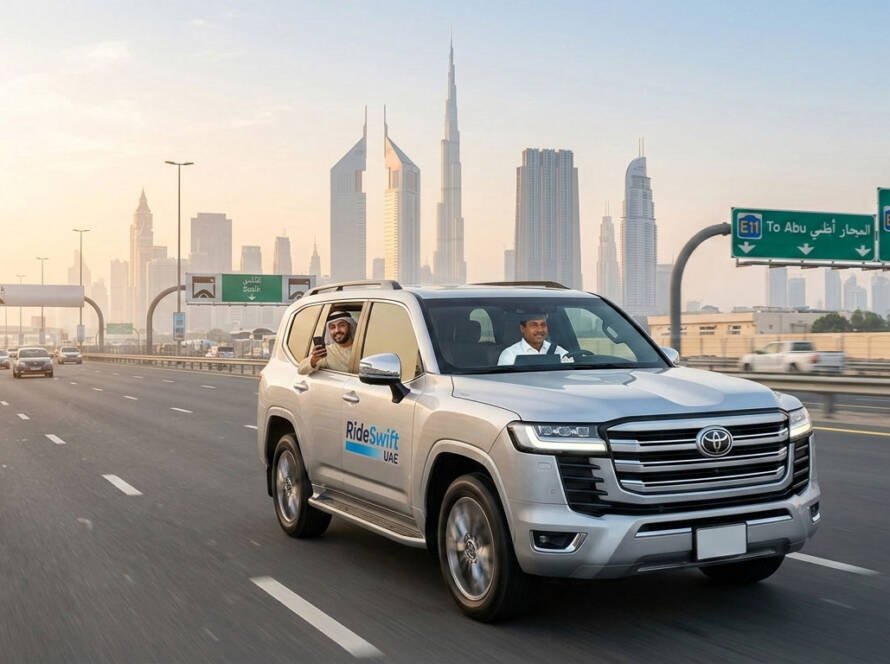
Topography and climate drastically alter mobility strategies. Taking the standard Silicon Valley blueprint and forcing it into a completely different urban environment never works. I spent considerable time analyzing the commuter flow between Dubai and Abu Dhabi. The challenges there are unique. Extreme summer temperatures mean a five-minute walk to a pickup point is entirely unfeasible. The infrastructure heavily favors personal vehicles, and the arterial highways operate at high speeds.
In these environments, managed transportation solutions require extreme precision. Vehicles must have high-capacity climate control. Pickups must be exact, often right at the building vestibule. For organizations operating in this region, partnering with specialized providers is essential. Firms providing dedicated corporate transportation solutions understand the localized regulatory landscape and the specific comfort requirements of the workforce. They bridge the gap between pure peer-to-peer scoop carpool networks and dedicated, professionally chauffeured corporate fleets.
When deploying a corporate carpool network in the UAE, the routing logic must also account for specific tolling systems like Salik, and dynamic lane changes. It requires a nuanced understanding of expatriate residential clusters in areas like Dubai Marina or JVC, mapping these dense origin points to business hubs like DIFC or Internet City. The efficiency gains here are massive, provided the underlying tech stack is localized correctly.
Addressing Liability in a Scoop Carpool Program
Whenever I present a mobility plan to a board of directors, the general counsel inevitably raises their hand. Liability is the bogeyman of enterprise ridesharing. What happens if two employees are in a collision on the way to the office? Does workers’ compensation apply? Is the company vicariously liable?
These are entirely valid concerns that require ironclad policy framing. First, a true scoop carpool program operates under the legal framework of traditional carpooling, meaning it is non-commercial. The driver is not turning a profit; they are receiving reimbursement for commuting expenses. This distinction is critical because it prevents the driver’s personal auto insurance policy from categorizing the trip as commercial activity (like driving for Uber or Lyft).
However, sophisticated platforms add layers of protection. We implement rigorous driver vetting. Motor vehicle records (MVR) are automatically scrubbed annually. We mandate minimum personal insurance thresholds. In some complex enterprise deployments, the company secures an overarching contingent liability policy. This policy sits dormant, only triggering if a catastrophic event exceeds the driver’s personal limits. Structuring this correctly requires sharp legal counsel, but the precedent is well-established. Fear of liability should never paralyze a commute optimization initiative.
The Psychology of the Third Space
Sociologists often talk about the ‘third space’—the social surroundings separate from the two usual social environments of home and the workplace. Historically, this was the local pub, the cafe, or the community center. For the modern professional, the commute has become an isolated void rather than a third space. Transitioning to a shared commute model reclaims this lost time.
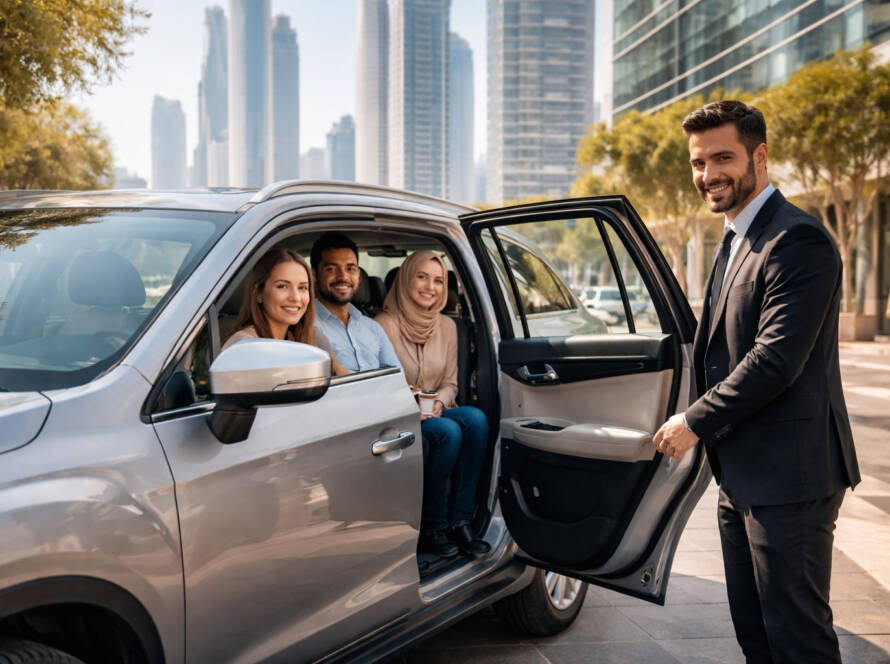
We mapped the psychological journey of a new scoop carpool user. Day one is characterized by apprehension. Day three involves polite, superficial conversation. By week two, we observe the formation of genuine micro-communities. These vehicles become mobile think-tanks or, equally importantly, designated decompression zones. The psychological safety of riding with vetted colleagues—people who understand the specific stresses of your exact workplace—cannot be overstated. It creates a buffer that dramatically improves morning productivity and evening wind-down routines.
Overcoming Internal Resistance and Change Management
Rolling out a new system is 20% technology and 80% change management. You will face resistance. Facilities managers will worry about managing designated parking enforcement. HR will worry about interpersonal conflicts occurring in transit. Middle management might suspect employees will use the system to arrive late.
Mitigating this requires a phased approach. I never recommend a full-scale, day-one launch across a 5,000-person enterprise. You select a specific geographic cohort or a single department. You over-incentivize the pilot group, provide them with premium coffee cards, absolute best parking privileges, and guaranteed ride-home programs (ensuring that if an emergency happens, the company will pay for a premium taxi so the passenger is never stranded). Then, you use that internal social proof to roll out the scoop carpool network globally. The data does the heavy lifting.
Integrating Advanced Fleet Telematics
As organizations mature in their mobility strategies, they often blend peer-to-peer corporate ridesharing with owned or leased fleet vehicles. This introduces the need for advanced telematics. If a company provides a fleet of electric vehicles (EVs) for employees to use in a scoop carpool arrangement, tracking the battery state of charge, tire pressure, and predictive maintenance becomes a core operational requirement.
Integrating these data streams creates a centralized mobility dashboard. A fleet manager can view exactly how many single-occupancy vehicles were removed from the road, the current location of all active carpools, and the charging status of the shared EVs. This level of visibility transforms commute management from a blind spot into a highly optimized operational asset.
The Trajectory of Commute Optimization
Looking ahead, the integration of autonomous vehicles (AVs) will radically reshape corporate carpool networks. We are currently preparing infrastructure for a reality where the vehicle itself acts as the driver. In this model, the enterprise licenses a fleet of autonomous pods. The scoop carpool routing engine summons these pods to residential clusters, groups employees dynamically, and routes them to the campus.
This removes the final friction point: the burden of driving. Every occupant becomes a passenger. Productivity tools will be integrated directly into the vehicle’s screens. The commute will become a highly productive, fully integrated segment of the workday. While widespread Level 5 autonomy is still years away, the software architectures we are building today—the predictive routing, the user matching, the carbon tracking—are the exact foundational layers required for that autonomous future.
For now, optimizing the human-driven commute remains the most immediate, high-impact lever an organization can pull to reduce costs and improve employee welfare. By abandoning outdated parking strategies and embracing algorithmic ridesharing, companies position themselves at the forefront of modern enterprise management. The transition requires effort, deep data analysis, and a willingness to challenge the status quo, but the systemic rewards are unequivocally transformative.